The Best Landscape Lighting Layout for Florida Homes

There is no single lighting layout that works for every Florida home. The best design depends on the architecture, lan
dscaping, outdoor living areas, and how the property is used after dark.
A good system should create depth and balance while keeping glare and excessive brightness under control.
Start with the architecture

Columns, stonework, entryways, and textured walls are often strong starting points. Narrow-beam fixtures can highlight tall columns, while wider beams may work better for larger walls or groups of architectural features.
The fixtures should be positioned so the light supports the structure rather than creating harsh hotspots or shining into windows.
Use trees to create depth

Lighting trees helps visually extend the property beyond the front wall of the house.
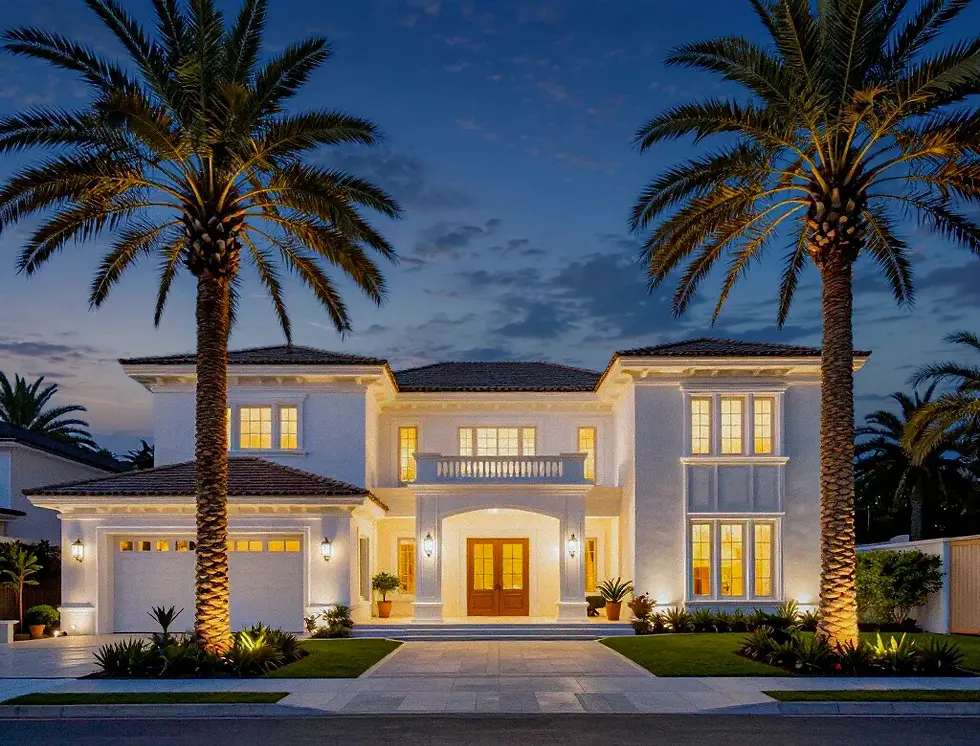
Tall palms can be illuminated from below to showcase the trunk and canopy. Oaks and wider trees may benefit from multiple fixtures to highlight their branching structure without flattening everything into one bright area. Downlighting from mature trees can also create a natural moonlight effect over lawns, driveways, and garden beds.
Illuminate paths carefully

Path lights should improve visibility without making the walkway look like an airport runway.
Instead of placing fixtures in a perfectly even line, use nearby landscaping, curves, changes in elevation, and natural stopping points to guide placement. Shielded fixtures or subtle in-grade options can help reduce visible glare.
Do not forget the backyard

Pool cages, lanais, patios, and outdoor kitchens often benefit from gentle downlighting. This can make the area more usable while avoiding the harsh feeling of a bright floodlight.
Motion-activated lighting may also be useful around gates, side yards, and pet areas.
Keep the color temperature consistent

Warm-white lighting, often around 2700K, complements many Florida homes and creates a comfortable, resort-style atmosphere.
Mixing several different shades of white can make the design look disconnected, so consistency is usually best unless there is a specific reason to create contrast.
The goal is not to light every inch of the property. Some darkness is important. Contrast, shadow, and carefully selected focal points are what make a lighting design feel polished instead of overpowering.


Comments